Below are images taken at the observatory. Higher resolution copies and more information about the object are available through the link to Astrobin following the images. For reference purposes, a light year is approximately 5.9 trillion miles/9.5 trillion kilometers.
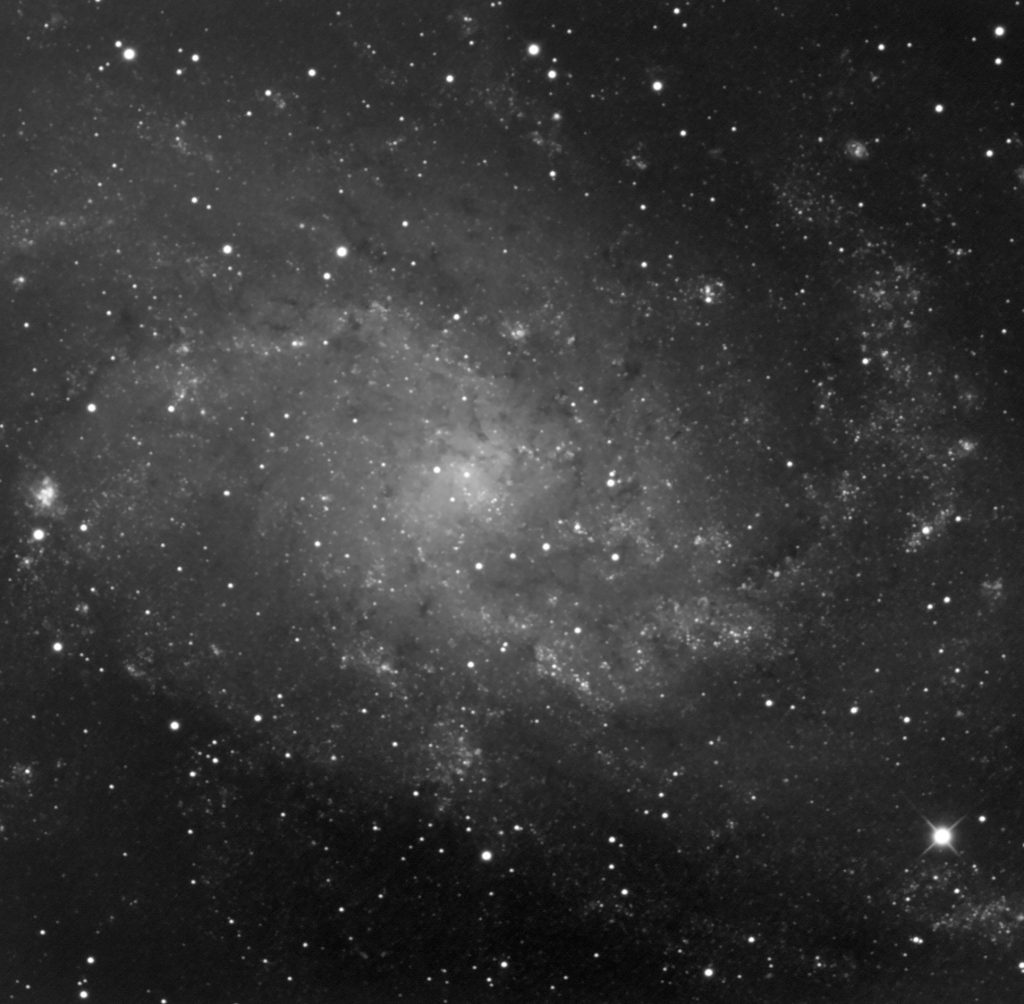
Messier 33, the “Triangulum Galaxy” in Triangulum. This spiral galaxy is approximately 3 million light years from Earth and is part of the Local Group of galaxies that includes the Andromeda Galaxy and our Milky Way Galaxy. This image was done to test a focusing routine. Thirty minutes total exposure duration through a clear filter on December 1, 2022.
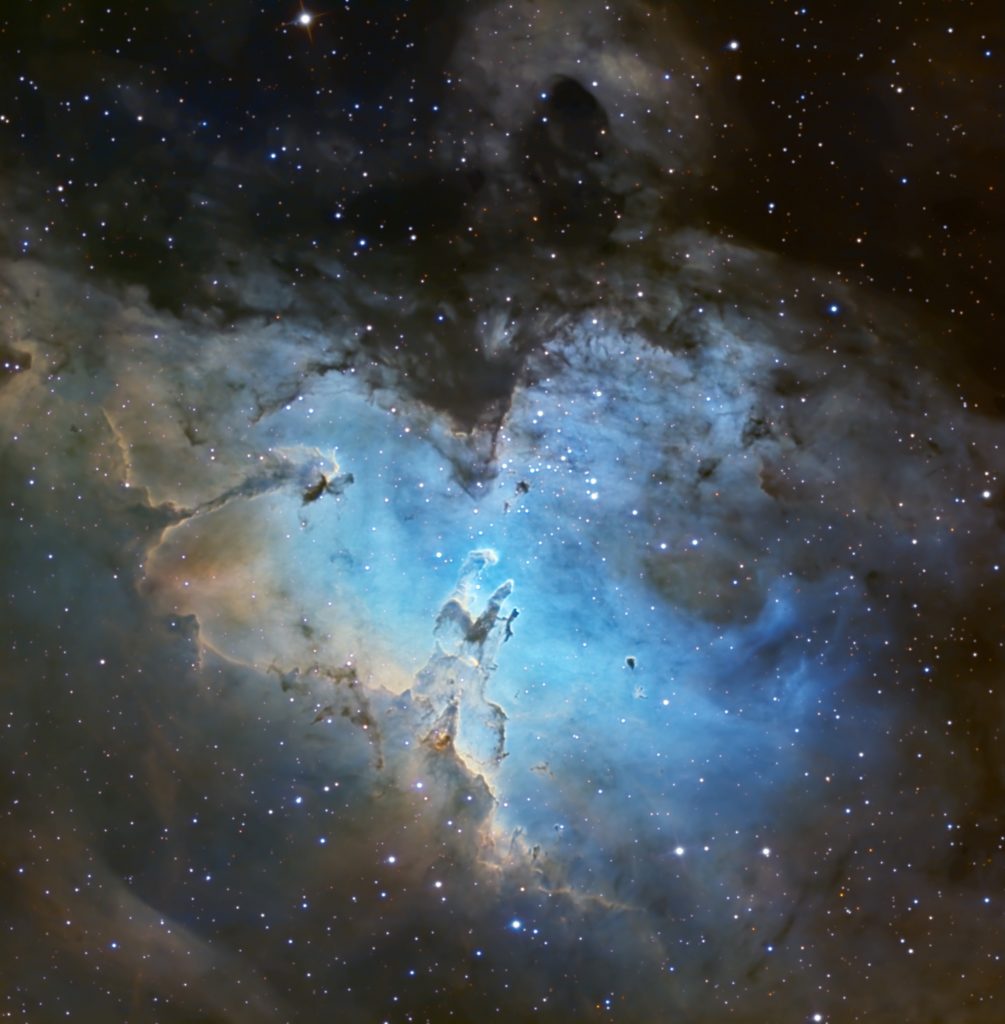
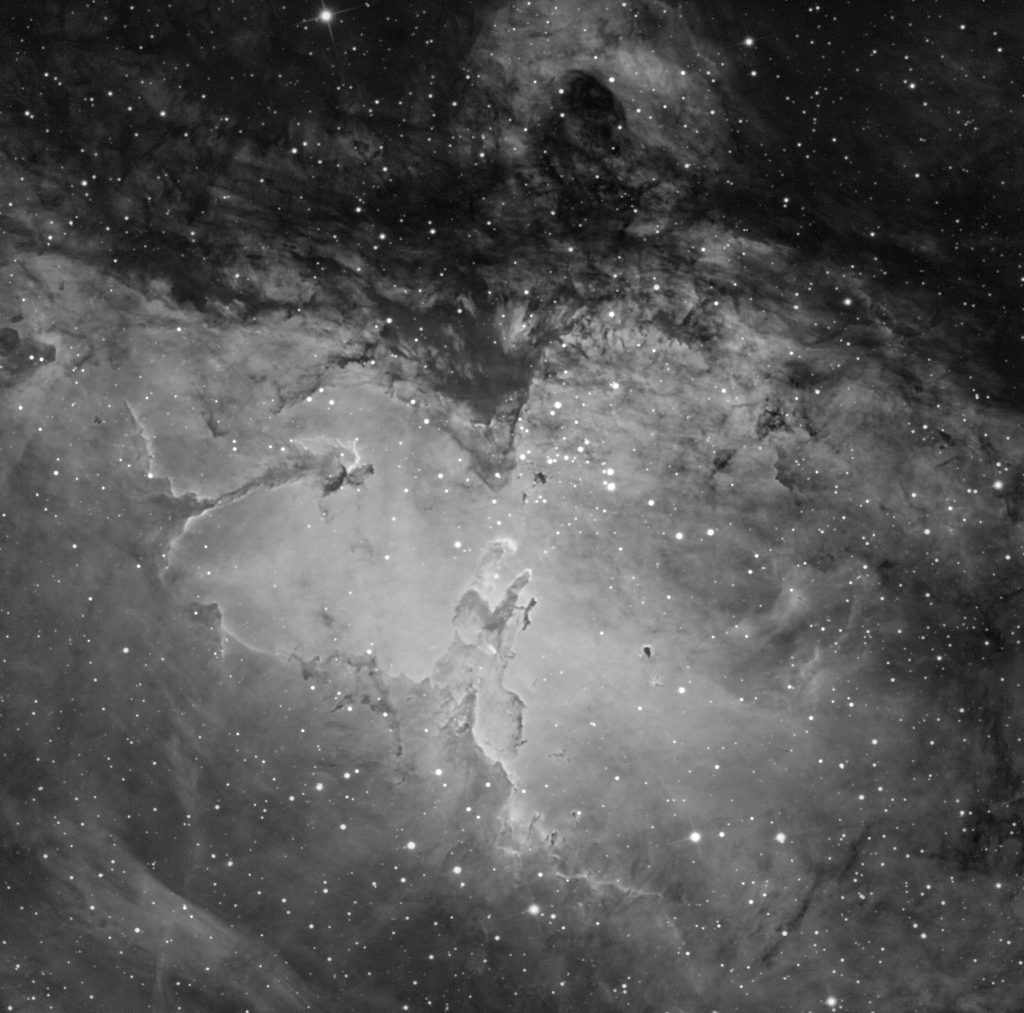
Messier 16, the “Eagle Nebula” in Serpens. This emission nebula is approximately 7,000 light years from Earth. The most famous feature in the center of the image, the “Pillars of Creation”, is approximately 8 light years tall. This is approximately twice the distance from our sun to the nearest star. Astrobin Link with image details.
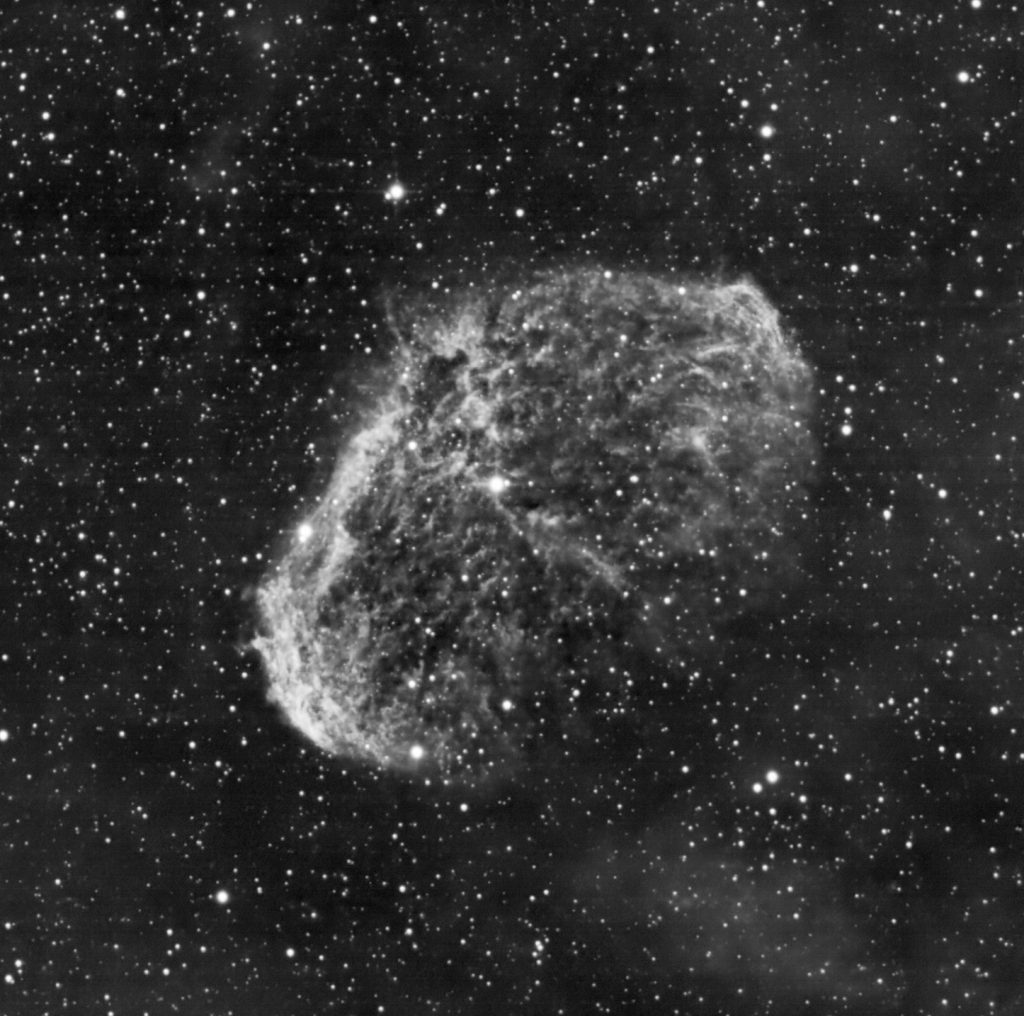
NGC 6888, the “Crescent Nebula” in Cygnus. This emission nebula is approximately 5,000 light years from Earth. Astrobin link with image details.
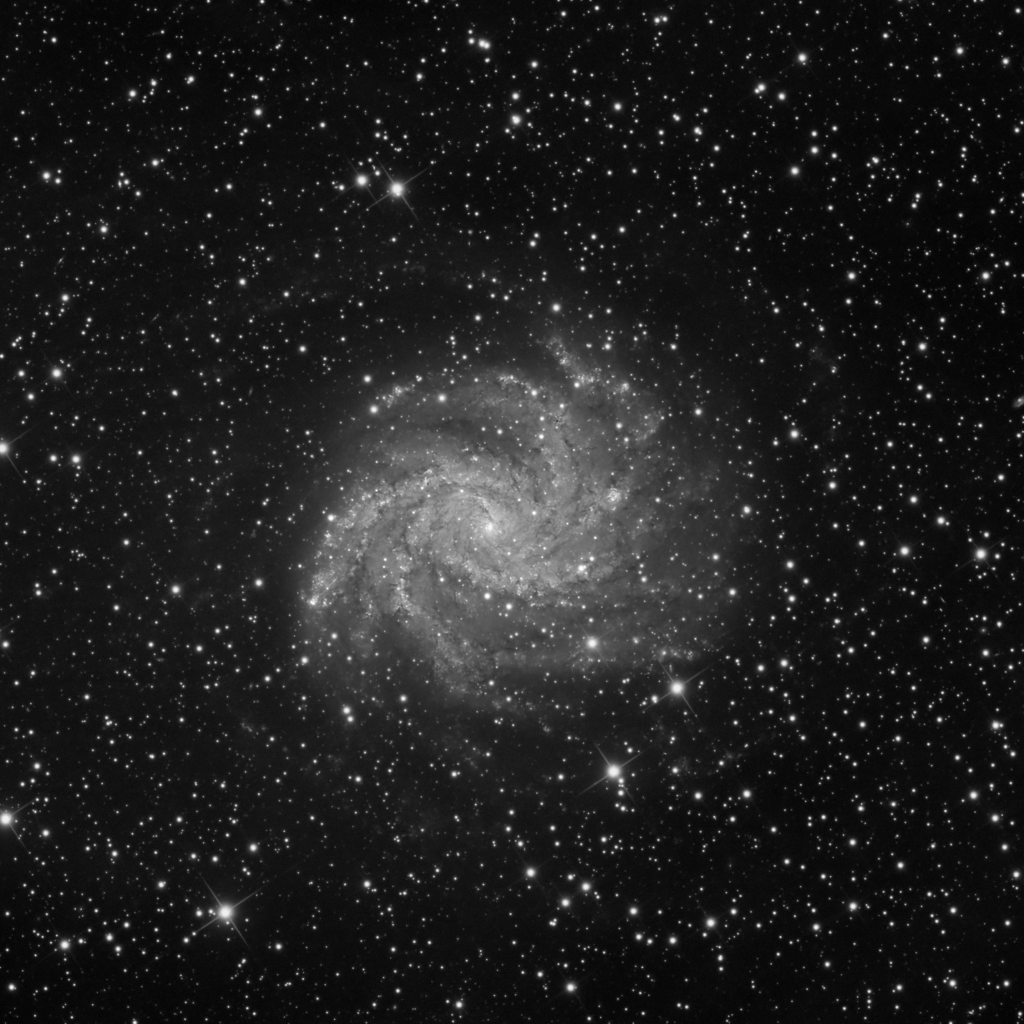
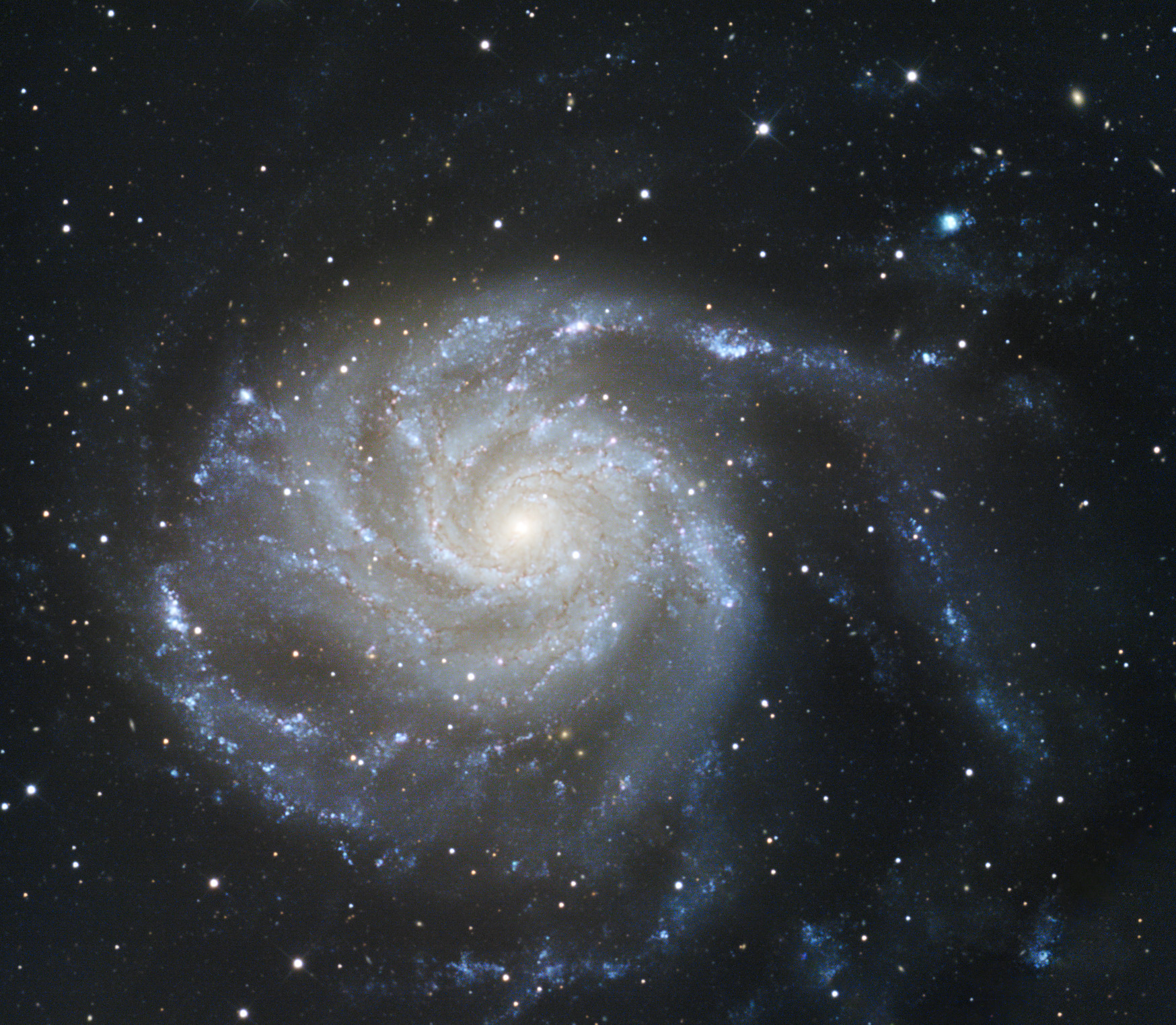
M 101, the “Pinwheel Galaxy” in Ursa Major. This spiral galaxy contains approximately a trillion stars and is approximately 21 million light years from Earth. The galaxy has a diameter of 170,000 light years, much larger than the Milky Way galaxy’s 110,000 light year diameter. Astrobin link with image details.
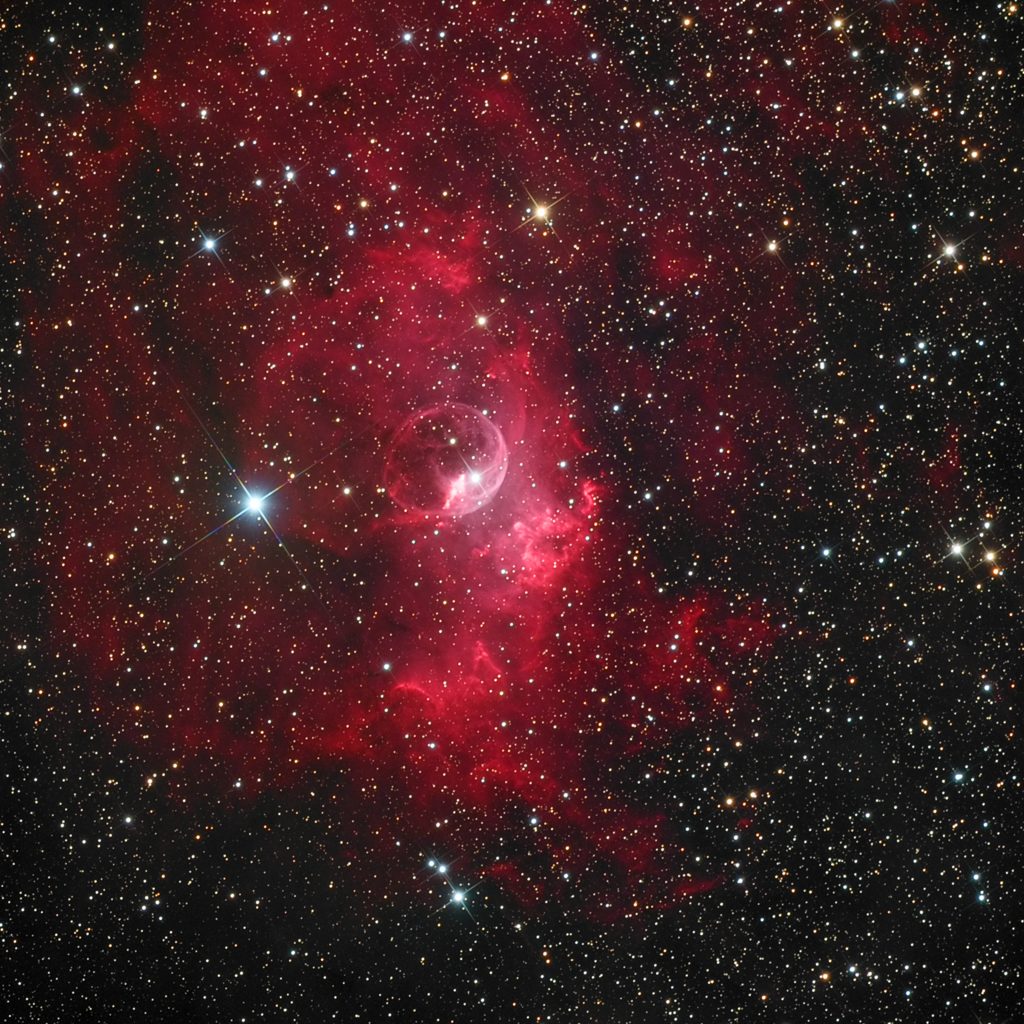
NGC 7635, the Bubble Nebula in Cassiopeia. The Bubble is approximately 11,000 light years distant, and is approximately 10 light years in diameter. The stellar wind of the massive Wolf-Rayet star BD+602522 is pushing the gas shell of the nebula outward, but the outward movement is being resisted by the nearby dense molecular cloud. This interaction causes the surrounding material to heat up and glow. Astrobin link with image details.
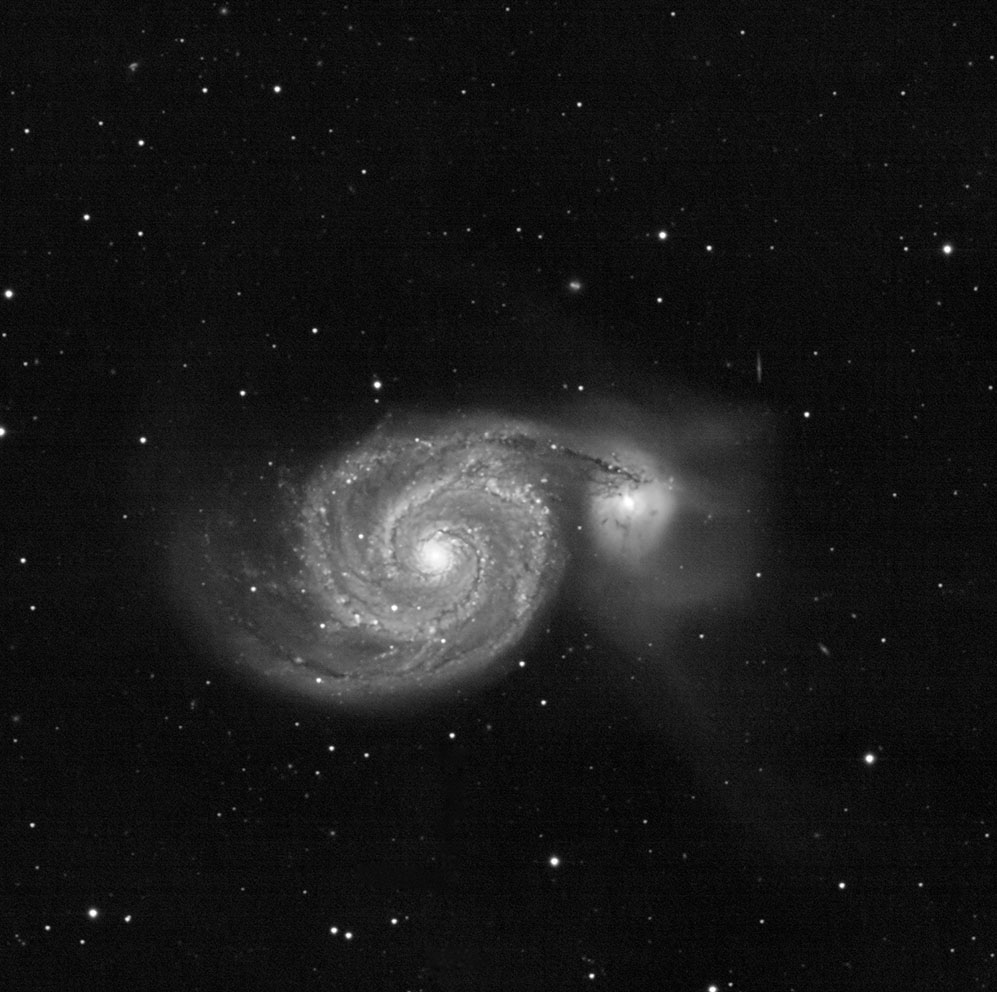
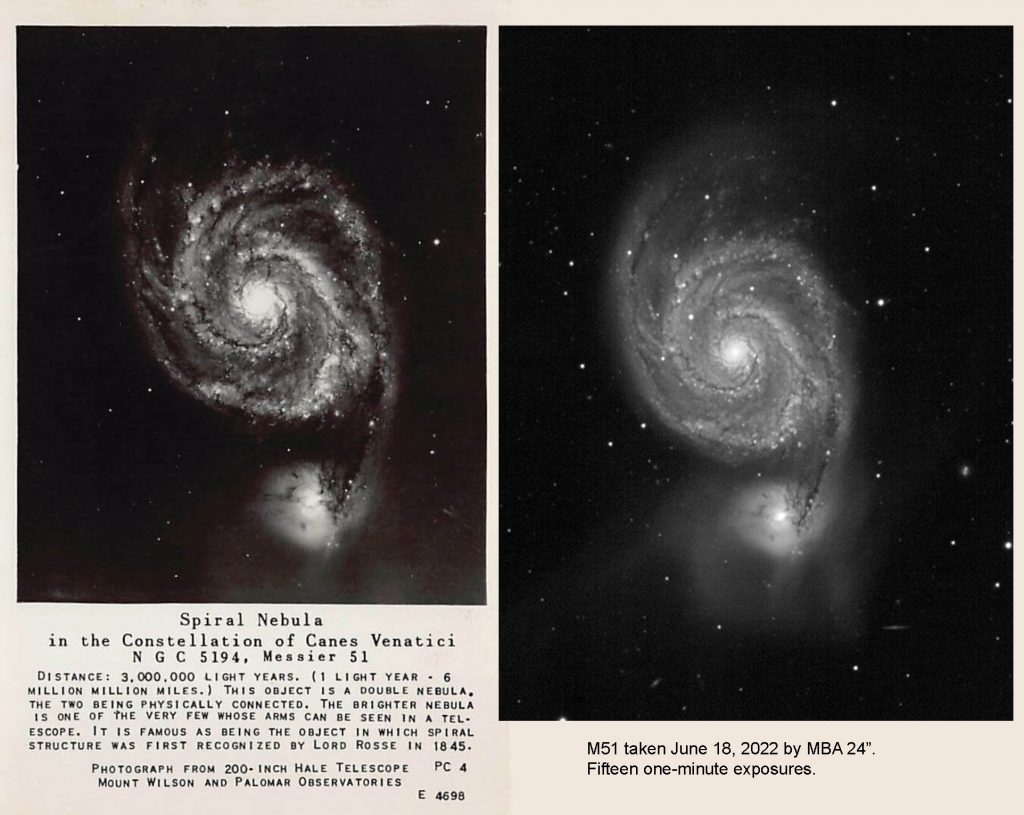
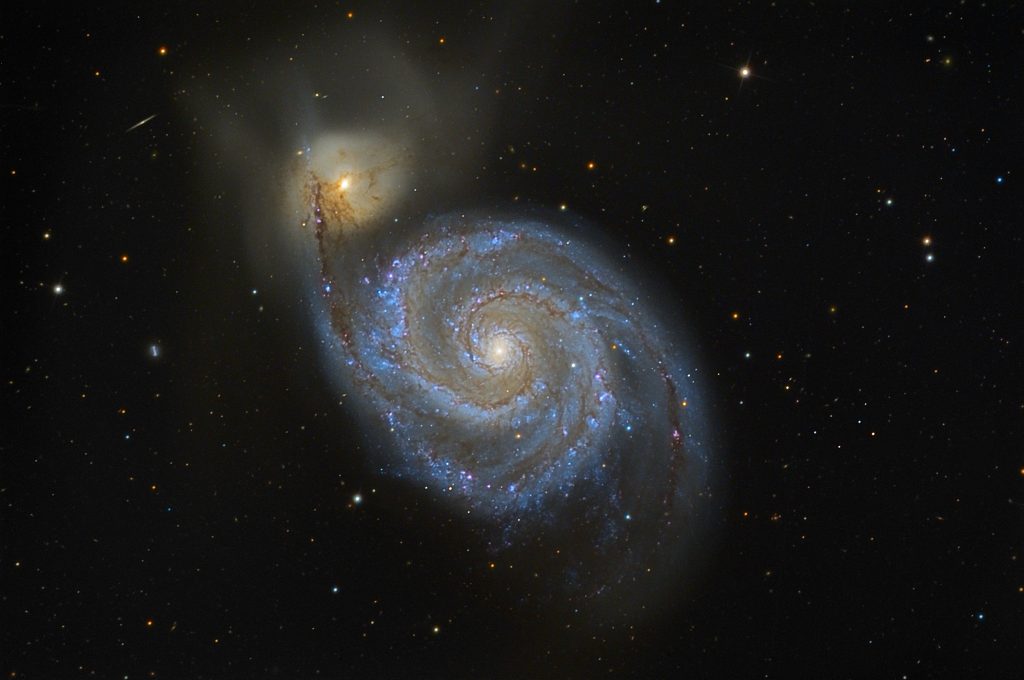
M 51, the “Whirlpool Galaxy” in Canes Venatici. This spiral galaxy contains approximately 100 billion stars and is approximately 31 million light years from Earth. 15 minutes total exposure duration through a clear filter on June 18, 2022. Below is a comparison of this image to one taken decades ago at Mt. Palomar with the 200″ Hale telescope, at the time the largest telescope in the world. Images taken today by the Hale telescope would surpass MBA’s telescope, but the comparison shows how much technology has changed over the decades. Much of the change is a result of the use of high sensitivity/low noise CCD and CMOS cameras.
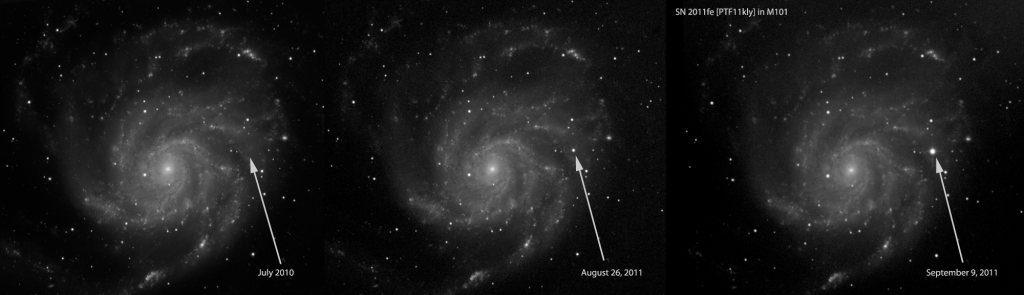
The Palomar Transient Factory project detected on August 24, 2011 a supernova in M101, initially designated as PTF11kly, later SN 2011fe. This series of images shows M101 before and during the event. Astrobin link with image details.
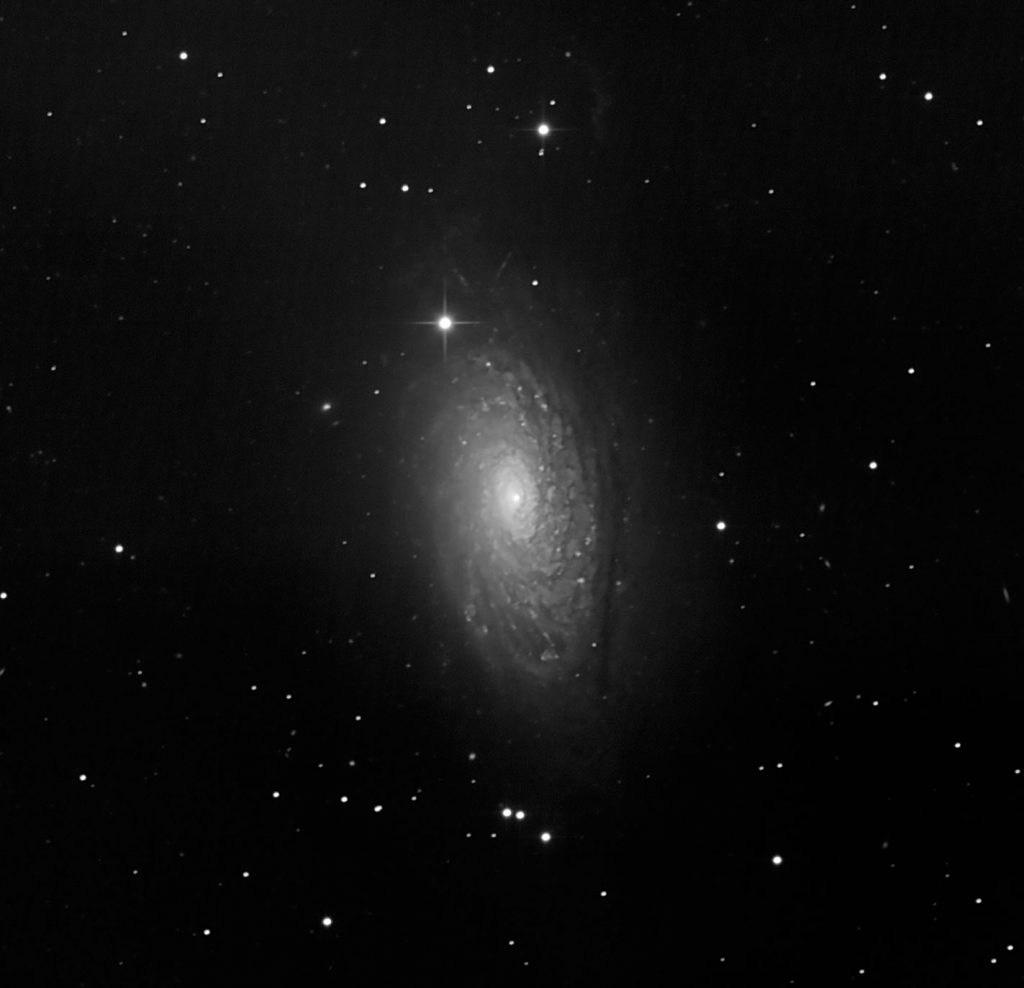
M 63, the “Sunflower Galaxy” in Canes Venatici. This spiral galaxy contains approximately 400 billion stars and is approximately 29 million light years from Earth. 60 minutes total exposure duration through a clear filter on June 9, 2022.
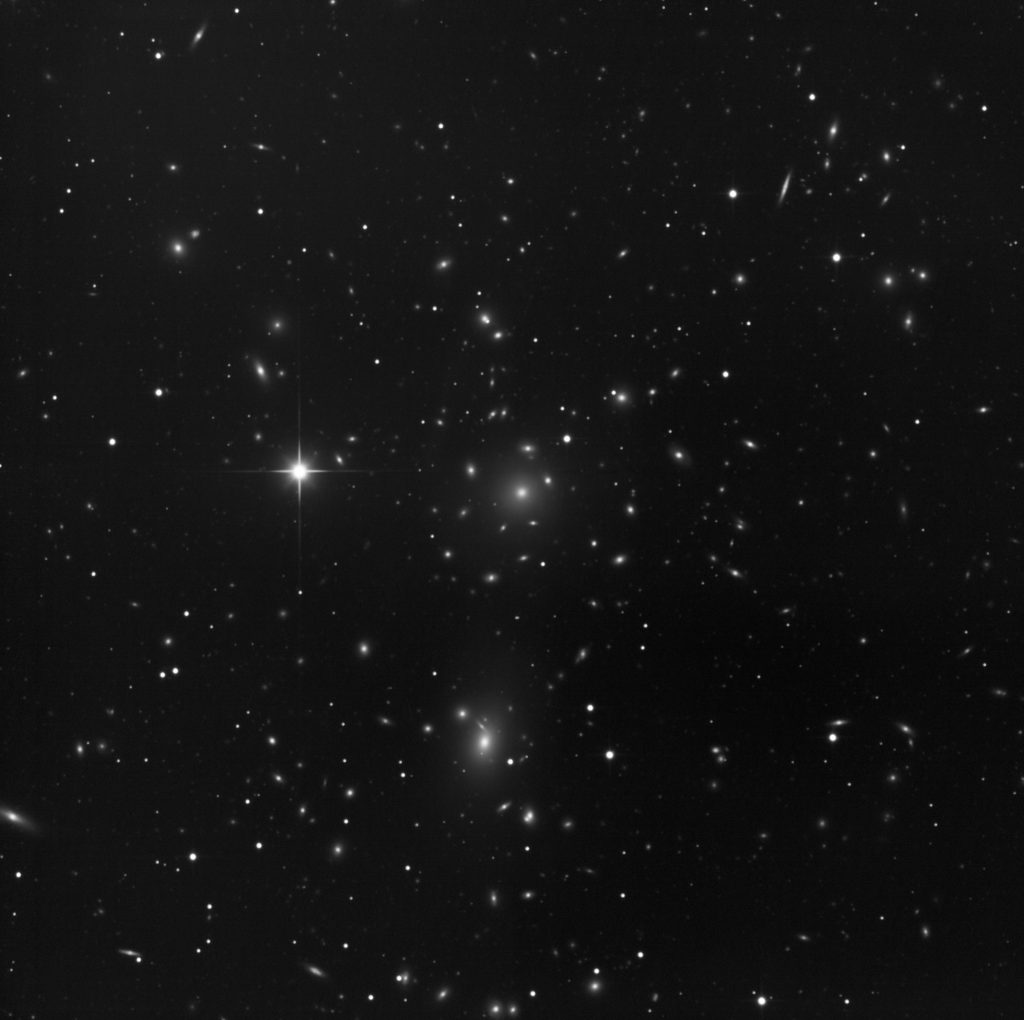
Abell 1656, the “Coma Cluster” in Coma Berenices. This large cluster contains approximately 1,000 galaxies and is approximately 320 million light years from Earth. 72 minutes total exposure duration through a clear filter on June 4, 2022. This image was acquired without human intervention using a web based observing plan uploaded to the observatory and executed automatically by ACP Expert, a sophisticated observatory control program. This software will enable students who are not trained in operation of the complex observatory systems to acquire images, with automated startup and shutdown of the observatory before and after the observing session. More information on this software is available HERE.
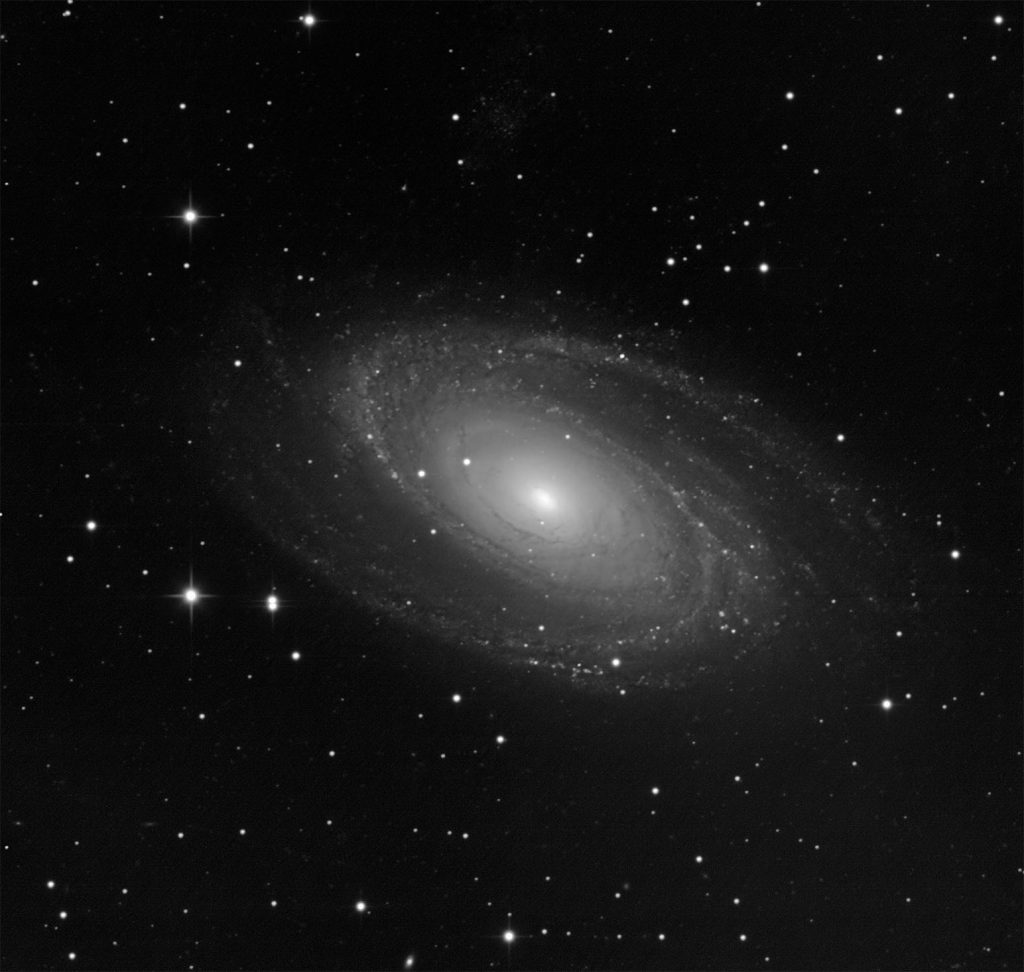
M 81, “Bode’s Galaxy” in Ursa Major. 12 million light years from Earth. 56 minutes total exposure duration through a clear filter on June 3, 2022. This image was acquired without human intervention using ACP Expert.
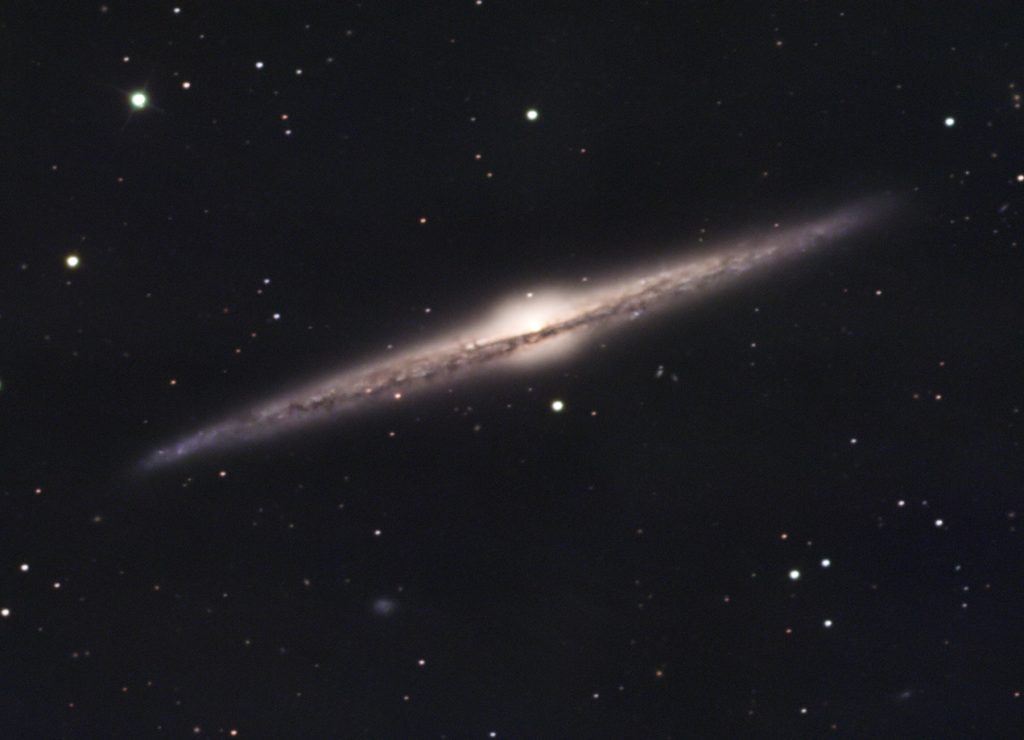
NGC 4565, “The Needle Galaxy” in Coma Berenices. 30 million light years from Earth. Seven hours total exposure duration through clear, red, green and blue filters on May 9, 10, 16 & 17, 2022.
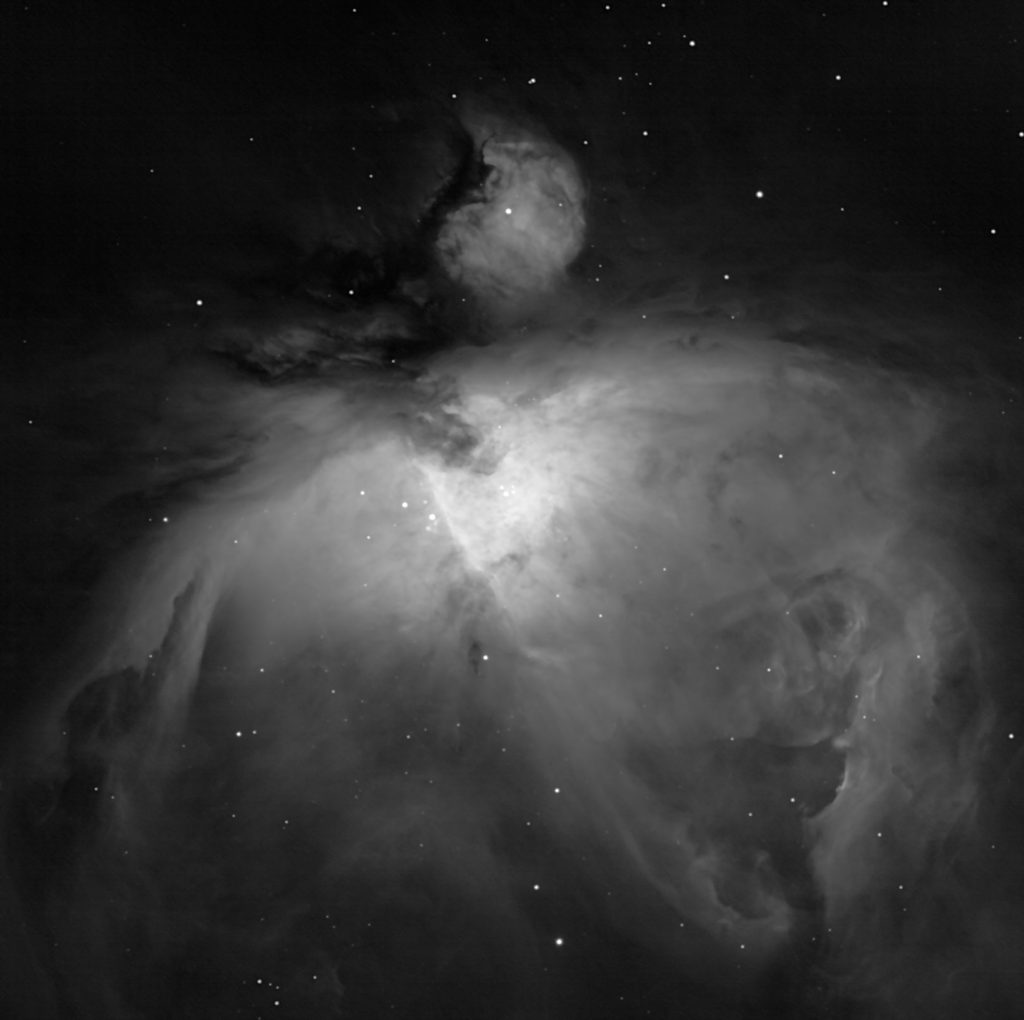
Orion Nebula March 13, 2022. 1,500 light years from Earth. 25 minutes total exposure duration through Ha filter. The Orion Nebula is 30-40 light years in diameter.
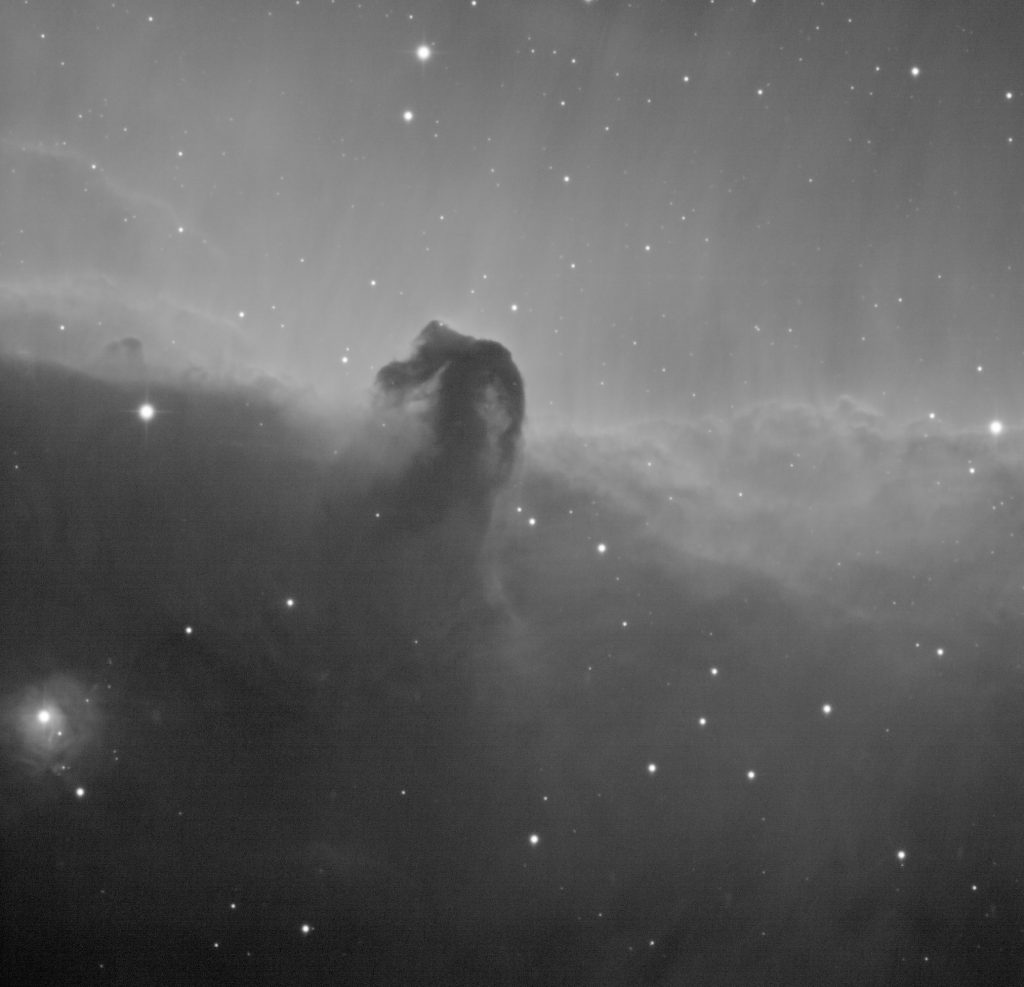
Horsehead Nebula February 28, 2022. 1,500 light years from Earth. 60 minutes total exposure duration through Ha filter.
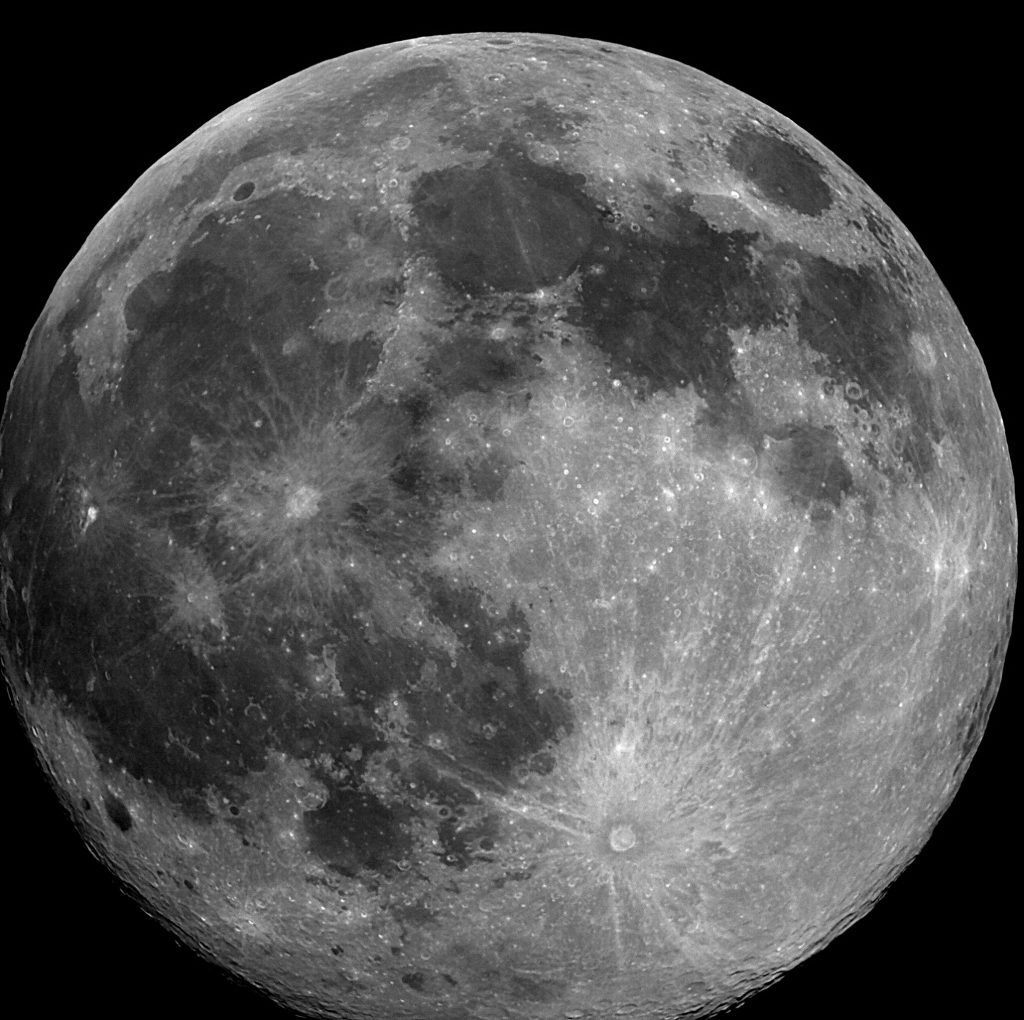
The Moon February 15, 2022. 1.25 light seconds from the Earth. Single 0.001 second exposure through Ha filter.